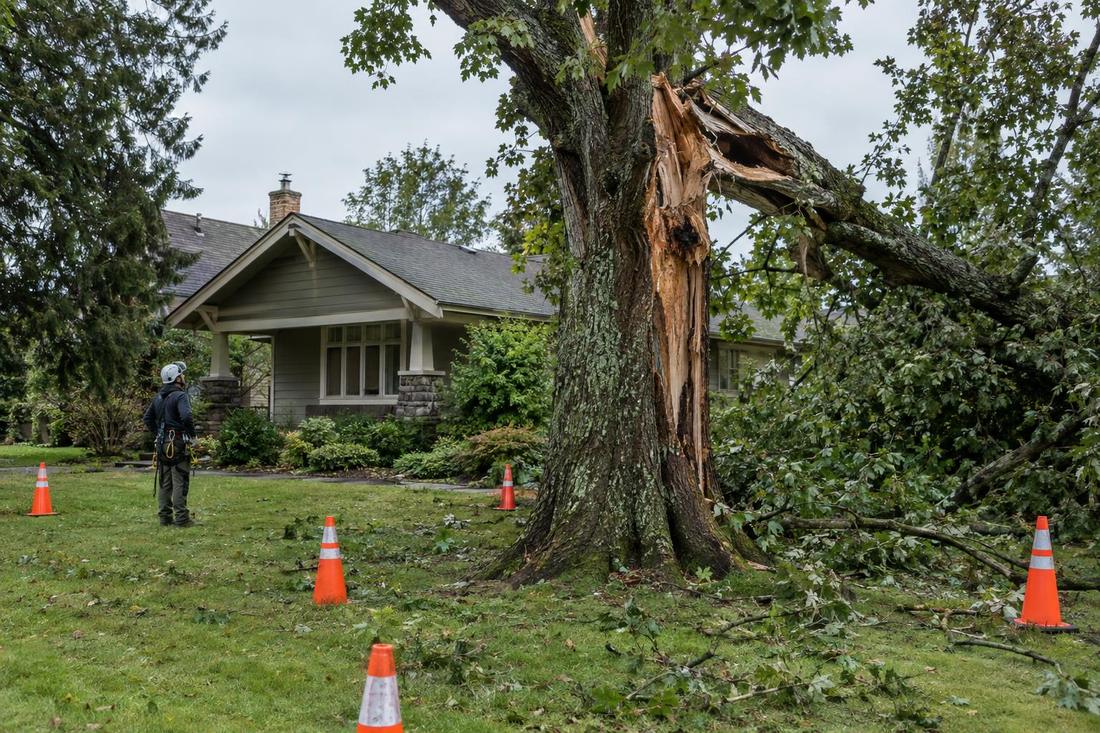
Key takeaways
- Stay away from downed lines and call the utility and emergency services.
- Do not try to cut a tree that is on a house or under tension.
- Have trees that survived checked for hidden damage.
- Document the damage for your insurer and keep records of what was done.
Safety first
After a storm, assume any downed line is live and stay far away. Call the utility and emergency services if anyone is in danger. A tree resting on a house or lines should be handled by trained crews with the right equipment.
Do not climb or cut a tree that has been split or is under tension. Limbs can spring or roll without warning.
Sort what can be saved
Trees that lost a few limbs and kept their main trunk and roots often recover with pruning. Trees that are split, leaning or have lifted roots are much more serious.
A tree with more than half its crown gone may not recover, and an arborist can tell you honestly.
Avoid common mistakes
Do not top a damaged tree to fix it. Do not use sealants on cuts. Do not hire the first crew that knocks on your door after a storm without checking insurance and references.
Keep receipts and take photos of the damage and the cleanup.
Plan for the next storm
Use the recovery as a chance to have your trees assessed, pruned for wind and cabled where needed. Trees that survived may have hidden damage that shows up later.
Cleanup crews across Nashville and Middle Tennessee are busy after big storms, so schedule early if you can.
Official sources and further reading
- National Weather Service, Nashville
- Trees Are Good, the ISA's homeowner site
- University of Tennessee Extension
These are independent organizations. Links open in a new tab.
Quick answers
Can a tree that lost its top survive?
Sometimes, if enough crown remains. An arborist can assess it and suggest pruning or removal.
Will my insurance cover the tree?
It depends on your policy and what the tree hit. Ask your insurer for specifics.