Key takeaways
- Most construction damage happens below ground, where roots are.
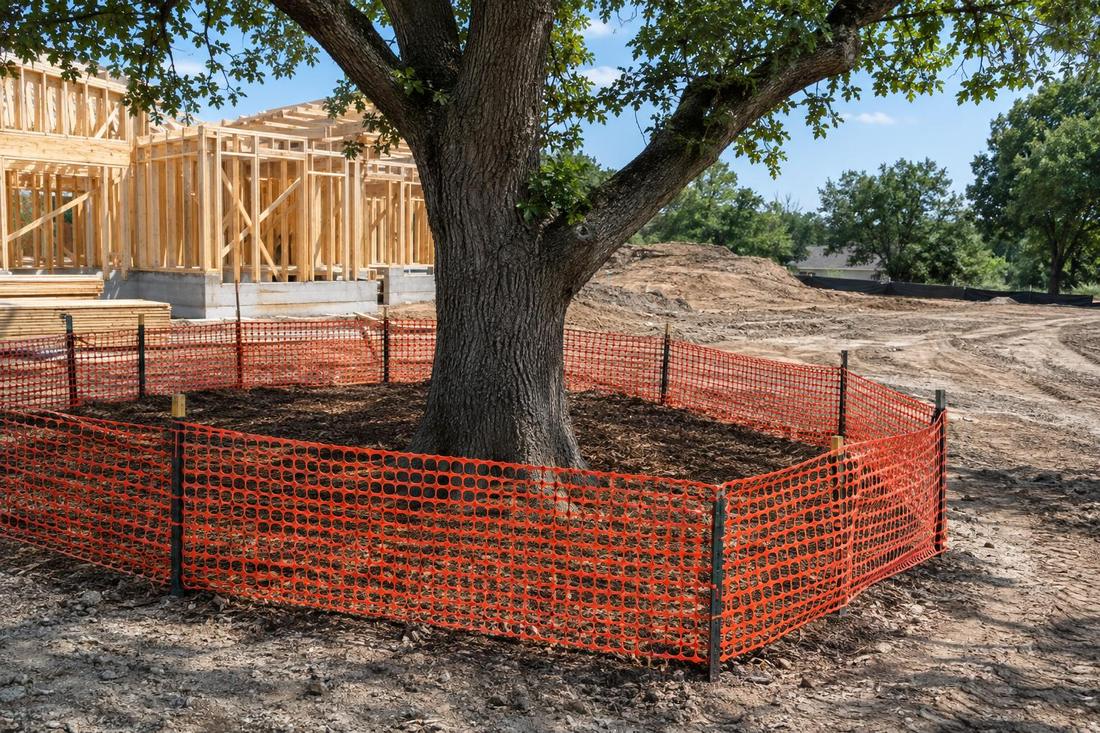
- Fence off the root zone before work starts, and keep equipment and materials out.
- Avoid trenching, grading and filling near the trunk.
- Water and mulch trees under stress, and check them through the project.
Why trees die after building
Roots spread far beyond the crown. Heavy machines compact the soil, trenches sever roots and fill soil piled over the root zone suffocates them. The tree often shows damage only after a year or two.
That is why trees that looked fine on the first day of a project can be gone within a few years.
Set up protection before work begins
Install sturdy fencing around the root zone, as far from the trunk as practical, and keep machines, materials and parking out of it. Mulch inside the fence to cushion the soil.
Tell contractors and subcontractors where the fence is and why.
Work carefully near roots
Where digging must happen, hand dig or use air tools to find roots, cut them cleanly and avoid tearing. Tunneling under roots can protect them where trenches cross.
Do not change the grade near trunks, and keep soil from piling against the bark.
Care after the project
Water deeply in dry spells, mulch and have an arborist check the trees after work ends. Prune damaged limbs and watch for signs of decline.
Builders and owners on infill sites around Nashville often find that saving a mature tree adds as much value as any other feature.
Official sources and further reading
- Trees Are Good, the ISA's homeowner site
- University of Tennessee Extension
- Tennessee Urban Forestry Council
These are independent organizations. Links open in a new tab.
Quick answers
How big should the protected zone be?
As large as practical. A common approach scales it to the trunk size, and an arborist can recommend a distance for each tree.
Can I put a driveway near a tree?
Sometimes, with careful design and materials that let water and air reach the roots. Ask an arborist first.