Key takeaways
- Every removal starts with a plan for the drop zone and the route out.
- Large or close trees are taken down in sections with ropes and rigging.
- A crane is used when a tree is too big, too weak or too close to a structure.
- Cleanup, hauling and stump grinding are separate items to confirm.
The assessment
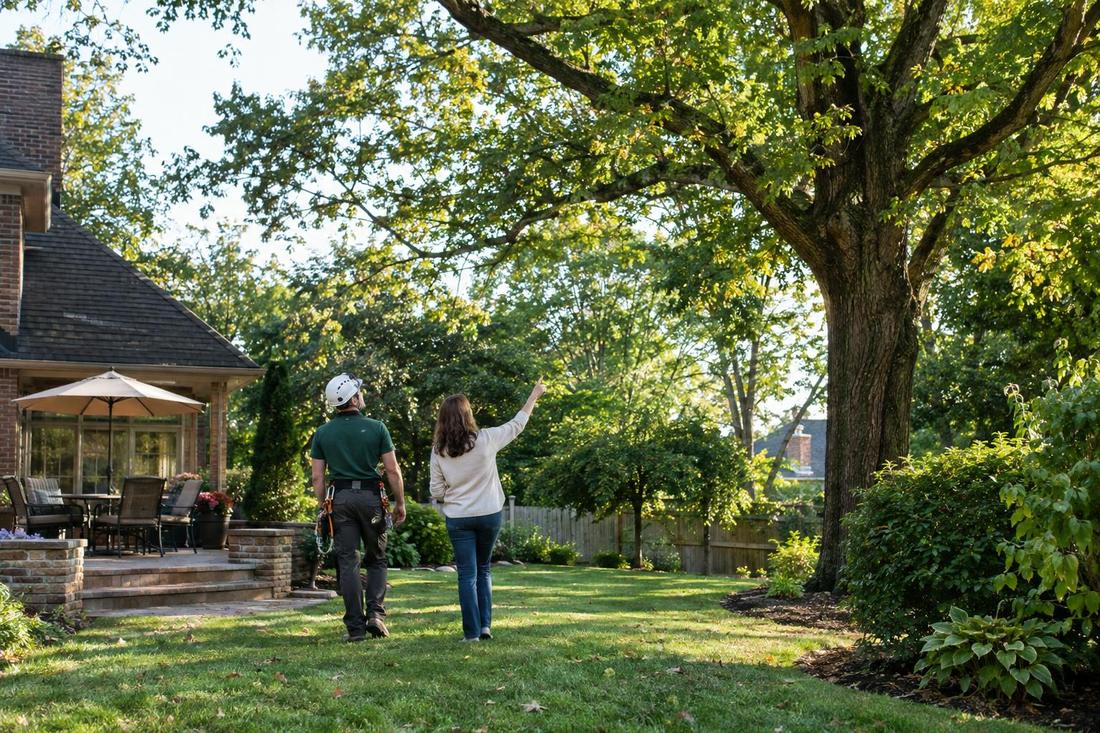
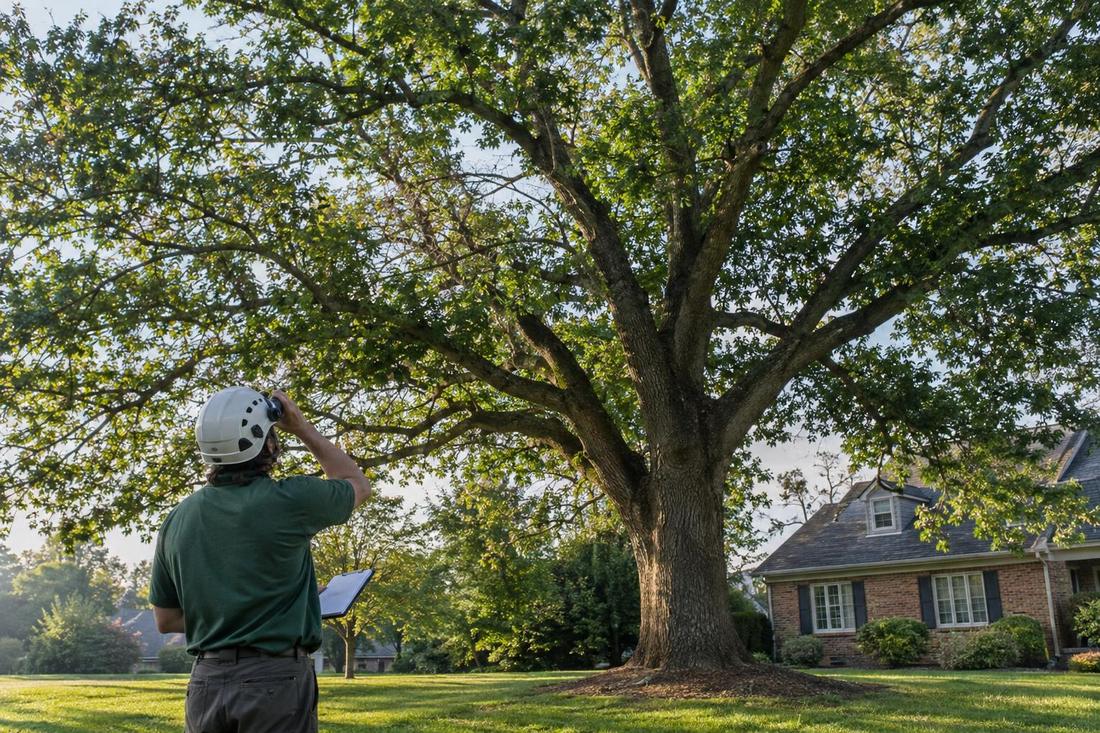
The crew looks at the size, lean and health and at everything within reach: roofs, fences, lines and gardens. They decide whether the tree can be felled whole or must be taken down in pieces.
They also plan access for equipment and where cut wood will go.
Taking it down
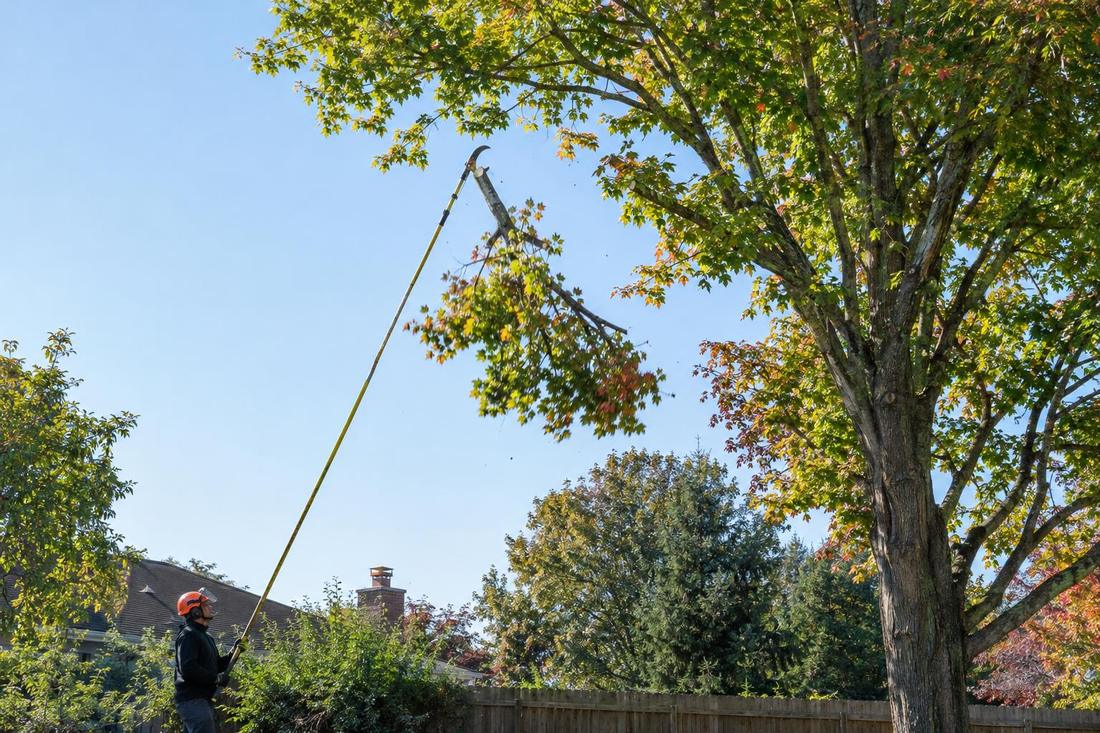
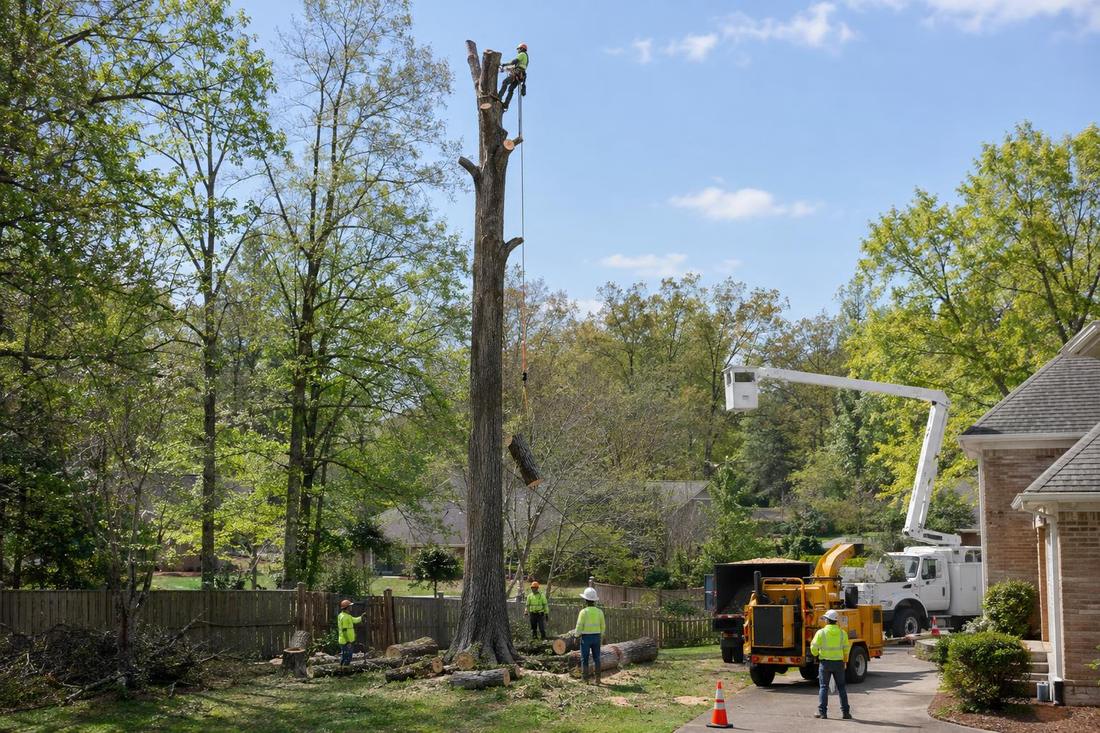
In open spaces, a tree may be felled with a planned notch and back cut. In tight spaces, climbers work from within the tree, cut sections and lower them on ropes. Cranes lift heavier pieces when needed.
Ground crew keep the work area clear and manage the ropes, and everyone follows clear signals.
Cleanup and the stump
Branches go through a chipper and logs are hauled away or cut for you. The crew rakes and blows the area clear. Stumps may be ground at the same visit or later.
Make sure you know whether stump grinding and hauling are part of the scope.
What you can do
Move vehicles, patio furniture and children and pets away from the work area. Tell the crew about sprinklers, buried lines and anything fragile.
On Nashville lots with tight access, a quick walkthrough helps the crew choose the safest route in and out.
Official sources and further reading
- Trees Are Good, the ISA's homeowner site
- International Society of Arboriculture (ISA)
- University of Tennessee Extension
These are independent organizations. Links open in a new tab.
Quick answers
How long does a removal take?
Small trees may take an hour or two, and large trees a day or more. The crew can tell you after seeing the site.
Do I need to be home?
It helps for the first walkthrough, but it is not required if the plan and access are clear.