Key takeaways
- Choose a tree for its mature size, not the size it is when you buy it.
- Native and well-adapted species usually do best here.
- Plant wide and shallow, with the root flare at ground level.
- Water deeply through the first seasons and keep mulch off the trunk.
Match the tree to the place
Look at the sun, the soil, the drainage and the space. A large shade tree needs room for its crown and roots, and small ornamental trees fit under wires and near houses better.
Consider what you want from the tree: shade, privacy, flowers, fall color or wildlife value.
Consider native and adapted species
Many native oaks, maples, redbuds, dogwoods and tulip poplars do well in Middle Tennessee and support wildlife. Some popular non-native trees have problems in our climate, so ask before you buy.
Mixing species protects your yard if a pest hits one kind of tree.
Plant it right
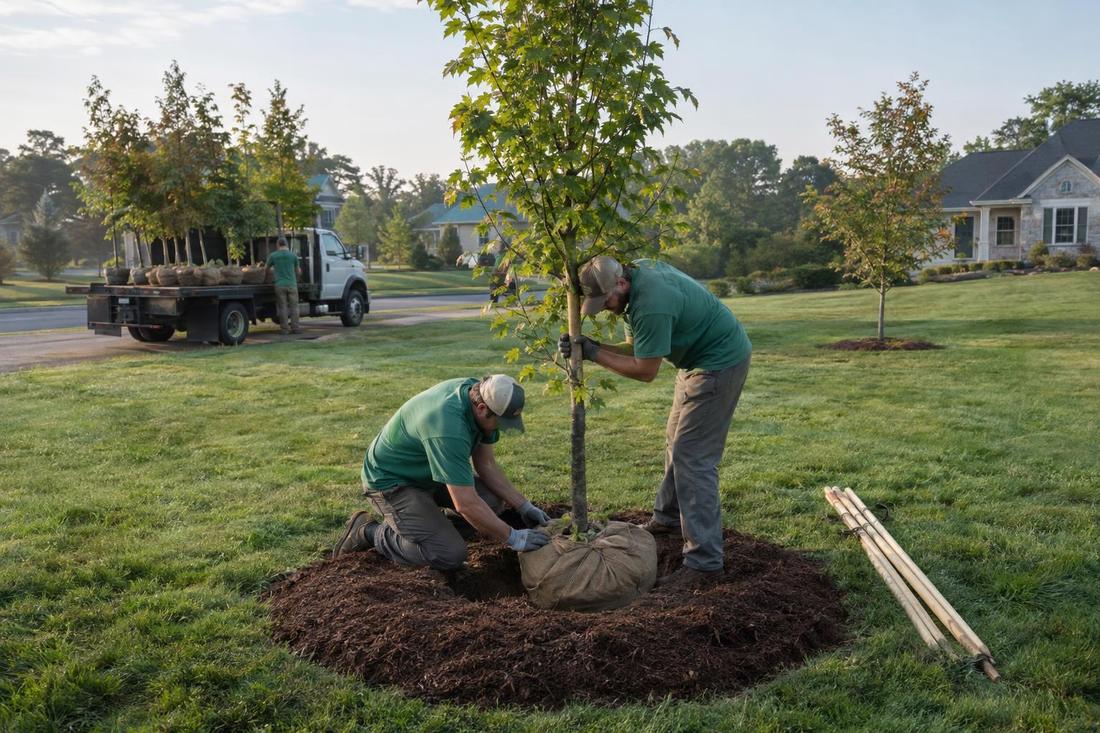
Dig a wide, shallow hole, not deeper than the root ball. Set the tree so the root flare, where the trunk widens, is at or just above the ground. Loosen circling roots, backfill with the soil you dug out and water well.
Add two to four inches of mulch in a wide ring, kept a few inches from the trunk.
Care in the first years
Water deeply and regularly through the first growing seasons, especially in dry summers. Check stakes and ties, and prune lightly to build a strong structure.
Homeowners across Nashville and the surrounding counties see better results when trees get steady care early.
Official sources and further reading
These are independent organizations. Links open in a new tab.
Quick answers
When is the best time to plant?
In Tennessee, fall and early spring are usually the better times.
How far from the house should I plant?
Far enough for the mature crown and roots, which depends on the species. A planting plan helps.