Key takeaways
- Grinding chips the stump and top roots below the surface and leaves the rest to rot.
- Removal pulls out the stump and main roots with excavation equipment.
- Grinding is faster and less disruptive for most yards.
- Removal is better when you need the roots gone for building or replanting.
What grinding does
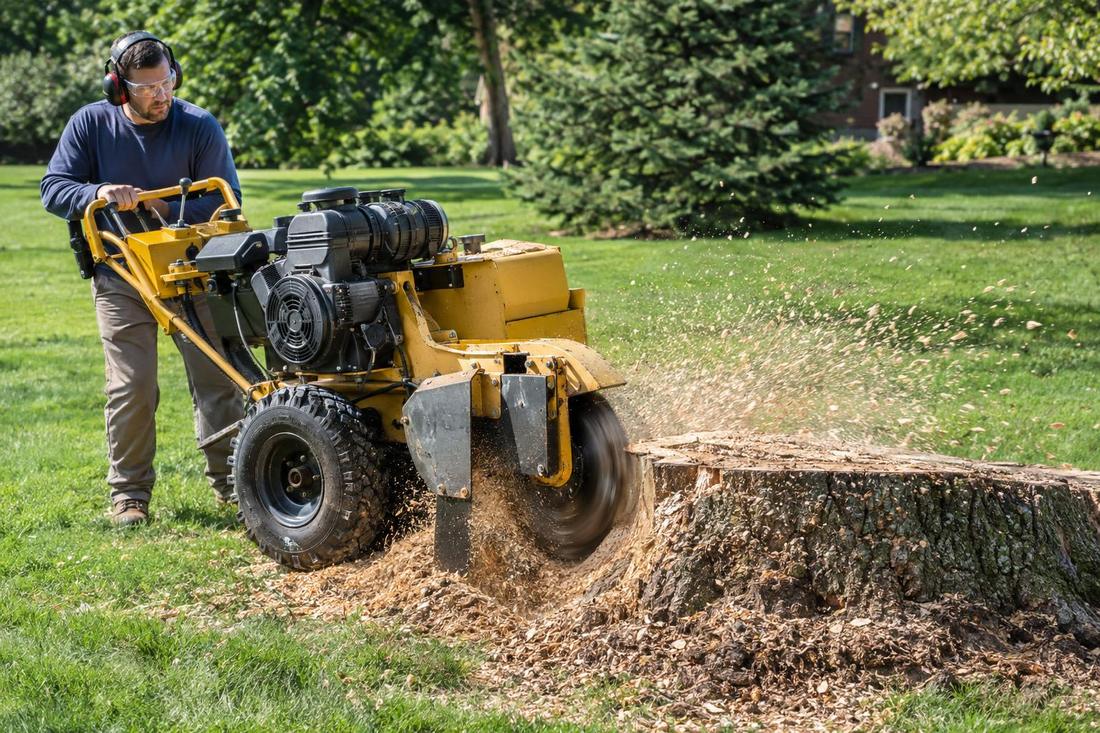
A stump grinder has a spinning wheel with carbide teeth that chips the stump away, usually several inches below grade and often along the main surface roots. The result is a pile of wood chips and a hole that is filled and leveled.
Roots left underground slowly decay, which is usually fine for lawns and beds.
What removal does
Removal digs or pulls the whole stump and the main roots out of the ground, leaving a large hole that has to be filled with soil and compacted.
It disturbs more ground and takes more equipment, but it removes more of the wood.
Choosing between them
For a lawn, a garden bed or a spot you simply want cleared, grinding is usually the better choice. For a foundation, a pool, a sewer line or a tree replanted in the same place, removal may be needed.
A crew can look at your project and recommend the right method.
After the work
Wood chips can be used as mulch or hauled away. Soil may settle over time as roots decay, so topping off with soil later is normal.
Replanting in the same spot is easier after removal or after grinding deeper and adding fresh soil.
Official sources and further reading
These are independent organizations. Links open in a new tab.
Quick answers
Will a ground stump grow back?
Some species sprout from roots, but grinding to a good depth greatly reduces it.
Is grinding safe near utilities?
Yes, once the utilities are located. Have lines marked before any digging or grinding.