Key takeaways
- Emerald ash borer kills ash trees, and early protection matters.
- Crape myrtle bark scale, bagworms and leaf diseases are common landscape problems.
- Many symptoms look alike, so a correct diagnosis comes first.
- Healthy soil and proper care make trees more resilient.
Emerald ash borer
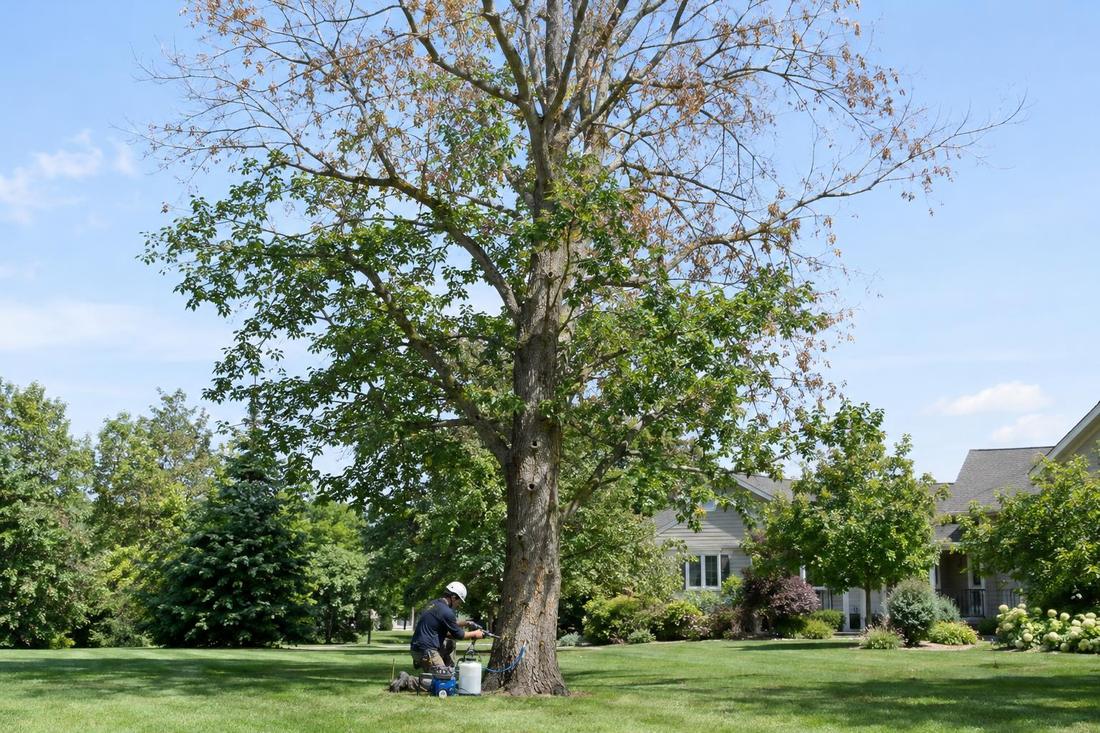
This metallic green beetle larvae feed under the bark of ash trees and cut off the flow of water and nutrients. Signs include a thinning crown, bark splitting and small D-shaped exit holes. Ash trees that are not protected usually die.
Healthy ash trees can often be protected with trunk treatments started early. Trees that have lost most of their crown are harder to save.
Scale, bagworms and other insects
Crape myrtle bark scale leaves a white, crusty coating on bark and black sooty mold on leaves. Bagworms build small hanging bags on evergreens and eat the foliage. Both are manageable when caught early.
Aphids, borers and other insects also cause damage, and the treatment depends on which one is present.
Fungal and bacterial diseases
Leaf spots, anthracnose, powdery mildew and canker diseases show up in wet years. Many are cosmetic, while a few, such as some oak diseases, can kill trees.
The best defense is good care: proper watering, mulching, pruning and avoiding wounds.
Get the diagnosis first
Drought, soil compaction and construction damage can look like a pest or disease problem, and the opposite is also true. Treating the wrong problem wastes effort.
An arborist can examine the tree, identify the cause and recommend a plan that fits Nashville-area conditions.
Official sources and further reading
- Emerald Ash Borer Information Network
- University of Tennessee Extension
- Tennessee Department of Agriculture, Division of Forestry
These are independent organizations. Links open in a new tab.
Quick answers
Should I treat every tree for pests?
No. Treat when a problem is confirmed or when a valuable tree is at high risk, like a healthy ash near emerald ash borer.
Can a tree recover from disease?
Many can, especially when care starts early and stress is reduced.